

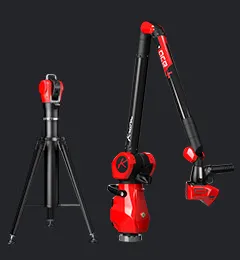


Measuring arms
OnyxAceMeasuring arms
with 3D scanners
Onyx SkylineAce Skylinewith 3D scanners

Sheet-metal manufacturing depends on the precision of its tooling and the accuracy of the inspection processes that validate each stage of production. Molds and dies form the basis for stamping and forming, ensuring that every component meets tight tolerances, often around ±0.1 mm in high-precision industries such as automotive, aerospace and electronics.
Even minor dimensional deviations can result in defective parts, costly scrap, and assembly misalignments.
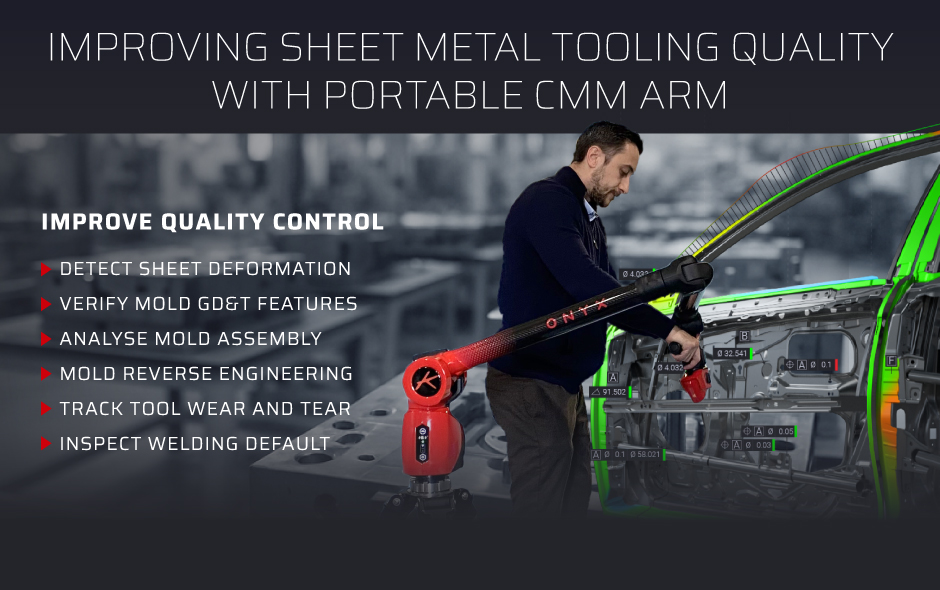
During forming and stamping operations, molds and dies face intense mechanical stress that can cause wear and tear over time. These deviations affect part compliance.
Manufacturers also face challenges such as material spring back, where elastic recovery causes distortion in stamped parts.
3D scanning, by inspecting all surfaces, verifies that the part has not undergone any deformation, and probing verifies critical geometries, such as holes, slots, and edges, ensuring accurate positioning and a consistent fitting of the components.
Welding introduces issues such as heat warping and variable weld penetration, causing anomalies in geometry and weakening joints.
While a small deviation of one or two degrees can create gaps during the bending process, it can lead to precision issues with the bend angles.
A portable arm allows operators to scan and measure actual geometries (bend angles and edge profiles), compare them to the CAD model, and quickly detect inaccuracies to ensure integrity before or after assembly.
Many sheet-metal parts include inserts, nuts, or studs that must be perfectly positioned and perpendicular to the surface. GD&T controls, such as positional tolerance and perpendicularity, are critical for ensuring proper fit and function.
The CMM arm enables quality control inspectors to measure these features with tactile probing while capturing surrounding geometry with the scanner.
Regular inspection and maintenance are essential to preserve tool performance and avoid costly downtime. By creating a digital record of each mold or die at different stages of its life cycle, manufacturers can track wear patterns and detect early signs of deformation or fatigue.
3D tools make preventive maintenance faster, allowing teams to intervene before issues appear. This proactive approach extends tooling life and ensures long-term process stability.
Many sheet metal plants still rely on legacy tooling without complete CAD documentation. 3D scanning creates accurate digital twins of existing molds, dies, or components.
These models support repair, modification, or reproduction and enable design optimisation to adapt tools to evolving production needs while preserving precision.
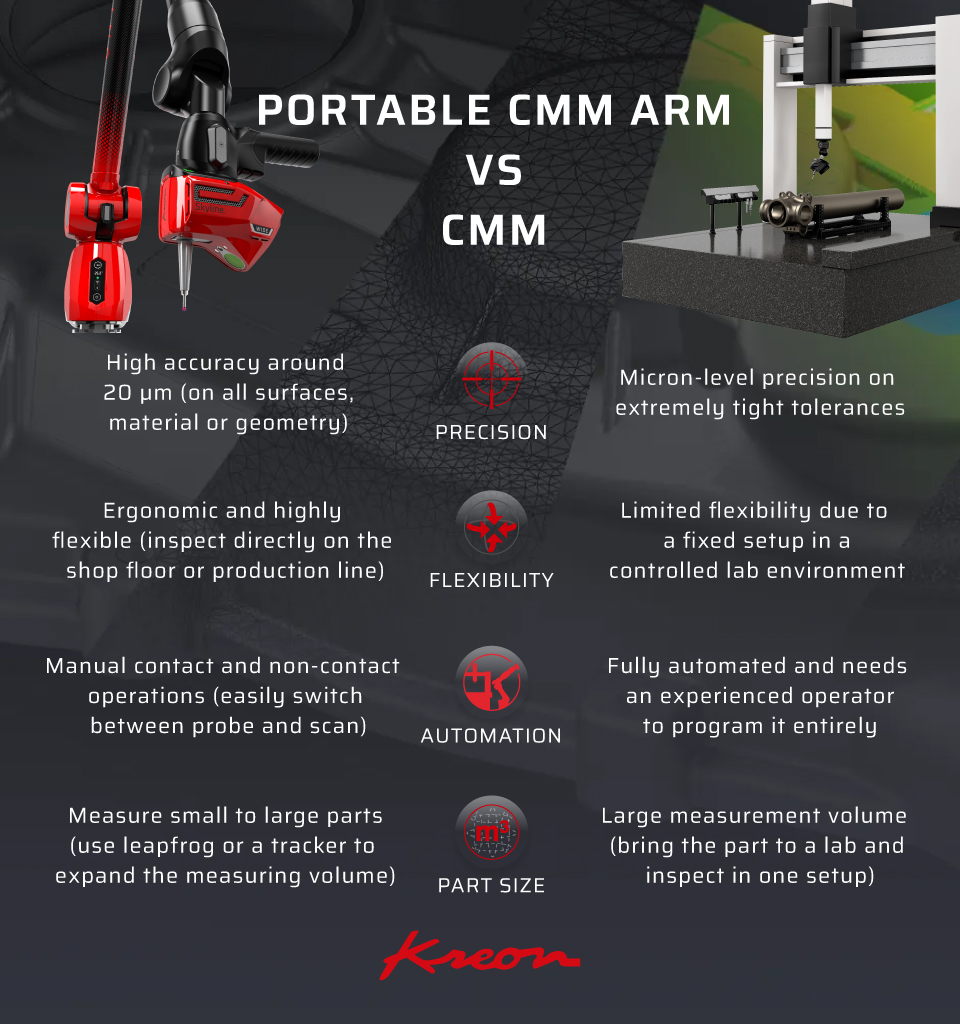
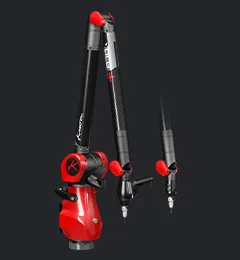
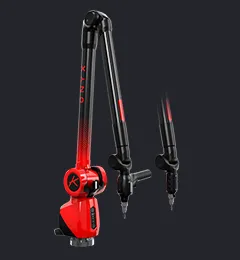
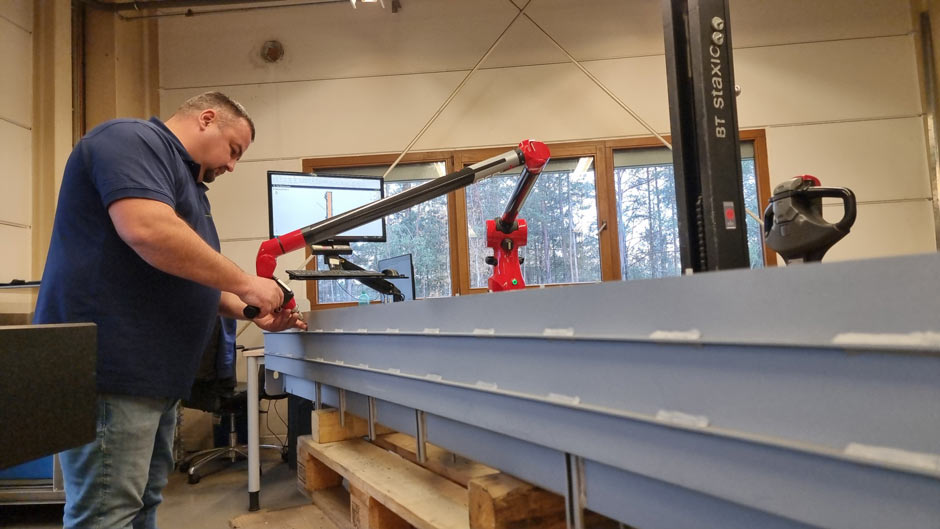
Large or flexible sheet-metal parts are often difficult to move and can distort during transport to metrology labs. Portable 3D systems, such as the Kreon Onyx Skyline, allow for direct inspection on the production line, reducing downtime and accelerating time-to-market.
While traditional CMMs excel in automation and precision, they lack flexibility for unique parts or on-site verification.
Stahl Lasertechnik GmbH, a German sheet-metal manufacturer, improved its quality control workflow efficiency by using the Kreon portable measuring arm with a Skyline 3D scanner, enabling precise First Article Inspection (FAI), faster defect detection, and more efficient on-site 3D inspections. Read the full case study.
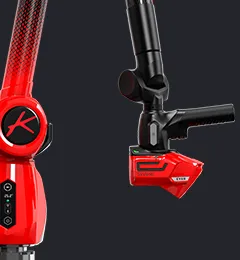
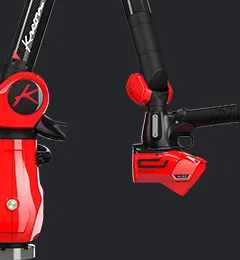
The 3D scanners used with measuring arms generate dense point clouds that reveal deviations undetectable by probing alone. With typical accuracies around 30 μm, they provide a rich visual comparison against CAD models, helping engineers to correct defects before they propagate. Scanning allows us to measure the entire surface and helps visualise the deviations at a glance, enabling control over the globality of the part.
Tactile sensors remain essential for critical dimensions requiring high precision or confined-area access (deep cavities, ribs, and undercuts). The combination of tactile and scanning modes allows users to measure GD&T features (position, perpendicularity) and defects in one session, optimising productivity without sacrificing accuracy.
To maintain measurement integrity, scanners and probes are regularly verified under ISO 10360 calibration procedures.
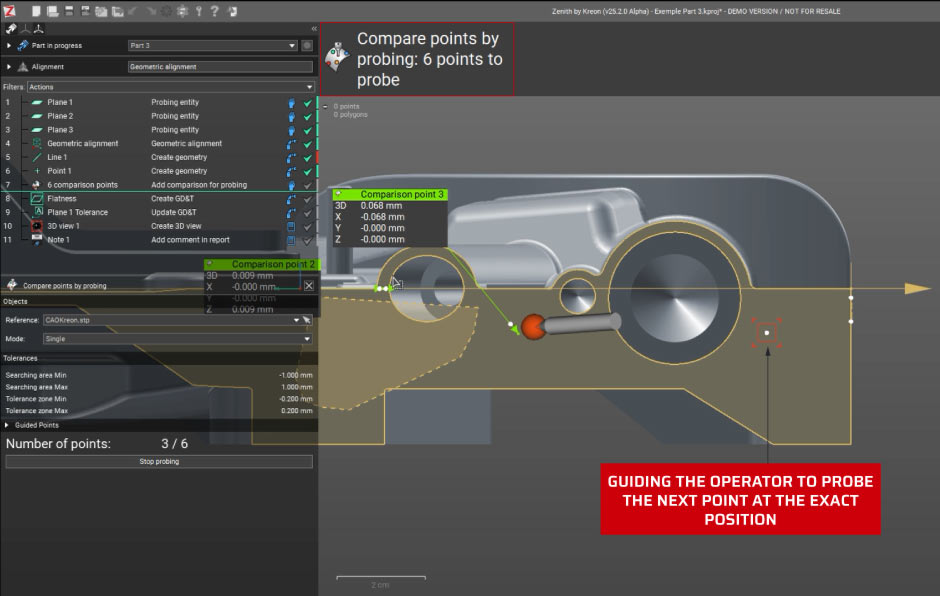
Since version 25.2.0, Zenith metrology software allows manufacturers to automate 3D inspection routines for tools and parts, ensuring precise inspection throughout the industrial process. Integrated with 3D measurement systems, it simplifies the entire quality checks, from defining measurements to running automated programs and generating detailed reports.
Supporting both contact and non-contact inspection with portable measuring arms and 3D scanners, Zenith adapts diverse metrology applications, including First Article Inspection or batch control.
Once launched, programs guide operators step by step, making inspections streamlined, repeatable, and reliable.
The quality of sheet-metal parts depends on precise tooling, stable forming, welding processes, and reliable inspection. By combining tactile accuracy and 3D scanning versatility within the Onyx Skyline scanning arm, manufacturers gain complete control over part geometry, improve process efficiency, reduce production costs and improve client satisfaction rates.
Discover how the Onyx arm with Skyline scanner can transform your inspection process. Contact our experts for a live demo.


